 Bhavik Khodiyar
  31 January, 2026
What Is Freight Forwarding? Definition and Benefits
Global trade has ensured that businesses of all magnitudes are able to purchase, sell and distribute goods across borders. Nevertheless, cross-country cargo shipments are never easy. It involves various modes of transport, rigorous rules and regulations, extensive paperwork, and liaisons among multiple entities. Freight forwarding plays a role in ensuring that international trade runs efficiently.
Understanding Freight Forwarding
Freight forwarding is the professional management and organization of the process of moving goods between one location and another, which is usually done in international ports. The freight forwarder is a business intermediary between the shipper and the various forms of transport services (shipping lines, airlines, trucking companies, rail operations, etc.).
The freight forwarders facilitate the whole activity, unlike the past when they only moved goods on their own. This involves carrier choice, route planning, documentation, storage arrangement, and others at the origin and destination.
What Is The Role Of A Freight Forwarder?
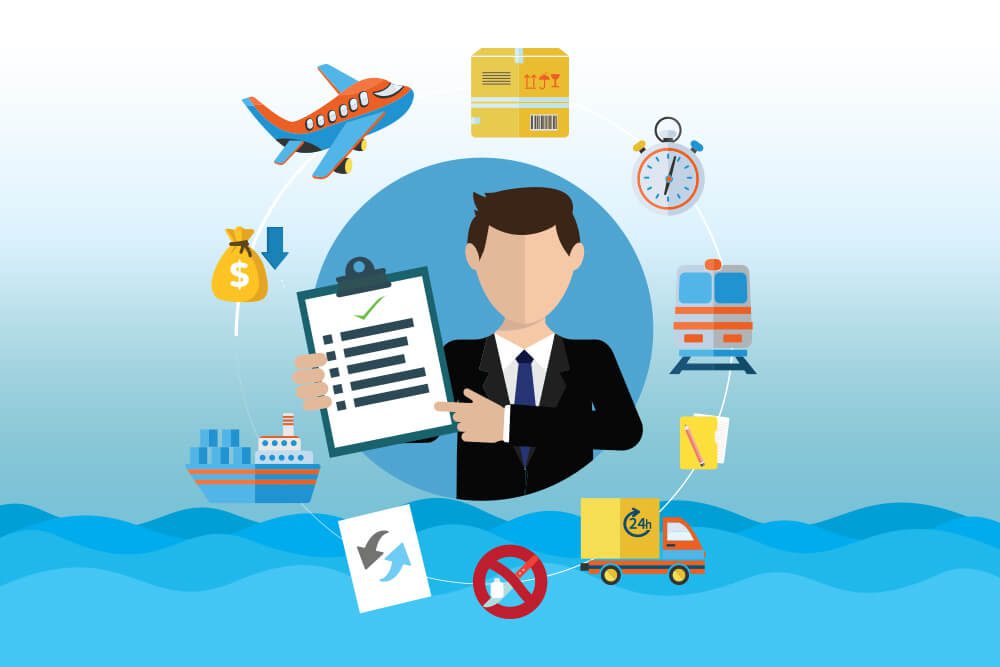
A freight forwarder is in charge of several factors of shipping operations to succeed in delivering the cargo to the destination on time and in quality.
They normally perform the following roles:
1. Carrier selection and rate negotiation: Negotiation of competitive rates and fixed transit schedule with existing relationships with carriers.
2. Documentation management: Making and handling shipping documents like bills of loading, commercial invoices, packing lists, and certificates needed to make cross-border trade.
3. Customs coordination: The coordination of the export and import customs to help in compliance with the regulations of the regulations or through licensed customs brokers.
4. Handling and storage of cargo: Preparation of temporary warehousing at the point of origin or destination as needed.
5. Shipment monitoring and communication: Moving shipments and reporting to shippers on shipments or delays.
6. Risk management and insurance: Helping buy the goods and cover the loss or damage during transportation.
7. Freight consolidation: This involves warehousing smaller loads into a single load to cut costs and enhance efficiency.
Having to deal with such activities, freight forwarders decrease the operational load of companies and lessen the chances of making expensive mistakes.
How The Freight Forwarding Process Works
Despite the difference in every shipment, the process of freight forwarding typically has a systemised flow:
● Finding logistics and booking a carrier – Having chosen the most appropriate carrier and mode of transport.
● Export haulage – Transporting goods from the shipper’s premises to the origin warehouse, terminal, or port.
● Origin handling – Cargo inspection, document verification, and proper handling to prepare goods for export..
● Exportation clearing at ports – Processing customs formalities and securing authorization to export goods.
● Main transport and tracking – Moving goods via sea, air, road, or rail while continuously monitoring shipment progress.
● Import clearance – Completion of customs inspections and payment of applicable duties and taxes at the destination.
● Destination handling – Receiving, storing, and preparing cargo for final delivery at the destination.
● Final delivery – Transporting cargo from the destination facility to the final consignee.
This chain of communication makes the supply chain continue.
Freight Forwarding vs Shipping Lines and 3PLs
Freight forwarding is usually confused with other logistics services. Shipping lines are owned and operated by vessels, aircraft, or trucks, and they physically transport cargo. Alternatively, these services are managed and synchronized by freight forwarders who do not own the transport facilities.
Third-party logistics (3PL) service provider providers will offer a wider range of supply-chain-related services such as providing warehousing, inventory and order fulfillment services. One of the services provided by some of the 3PLs is freight forwarding; other organizations prefer home deliveries due to their engagement in international commerce as required.
Benefits of Working With a Freight Forwarder
Collaboration with a freight forwarder has several practical benefits:
1. Easy international delivery: Complicated processes are handled by qualified professionals.
2. Cost efficiency: Freight rate, cost-effective routes and consolidation are used to manage costs.
3. Compliance with regulation: Lower risks of fines, delays or requests to hold the cargo because of the wrong paperwork.
4. Savings in time: The acceleration of cross-border coordination and problem-solving.
5. Dependability and experience: Availability of established networks and knowledge of logistics in several countries.
The advantages can be beneficial to companies that do not have in-house logistical knowledge or ship on a cross-border basis on a regular basis.
Potential Risks to Consider
Although freight forwarding has numerous benefits, considering the few:
1. The cost of services increases overall navigation expenses, but they frequently offset inefficiencies.
2. Reliance on a third party presupposes trust in the forwarder’s network and processes.
3. Less direct control over some of the shipping decisions after delegation.
Having a clear and well-learned freight forwarder will reduce these risks.
Is Freight Forwarding the Right Choice?
Freight forwarding suits those companies that conduct business internationally and wish to have their operations made less complex, deal with risks, and enhance their supply chain performance. It enables the companies to concentrate on the main tasks, whereas logistics specialists take care of the goods movement.
With the need to offer practical and reliable services to businesses with a need for international freight forwarding services, Kailash Shipping Services offers customized services on international freight forwarding. The company provides end-to-end forwarding services, including the complete scope of services.
Logistics, including the coordination with carriers, documentation, activities related to customs, and the delivery on time. Offering a lot of compliance, cost-appropriateness, and dependability, the service helps companies to transfer goods across the border in a secure and transparent fashion.