 Bhavik Khodiyar
  16 February, 2026
Shipping vs. Logistics: What is the Difference?
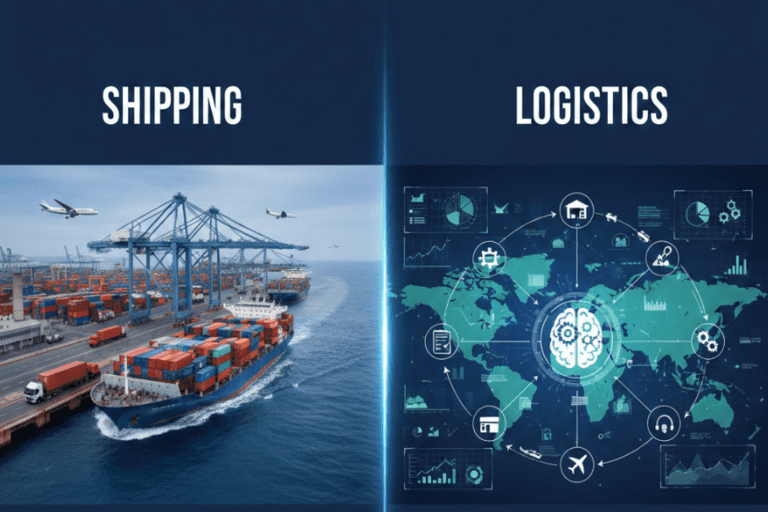
In supply chain management, there is overlap in the use of the terms shipping and logistics. They are related, but not identical. For businesses, e-commerce sellers, and even the ordinary consumers who even depend on these efficient delivery systems, knowing how they do differ is especially important.
To clarify, shipping is the actual transportation of goods from one location to another and logistics is a much broader term that encompasses all the work around planning and managing the entire flow of goods. Both are vital in helping to deliver products to customers in a way that is safe, efficient, and on schedule.
What Is Shipping?
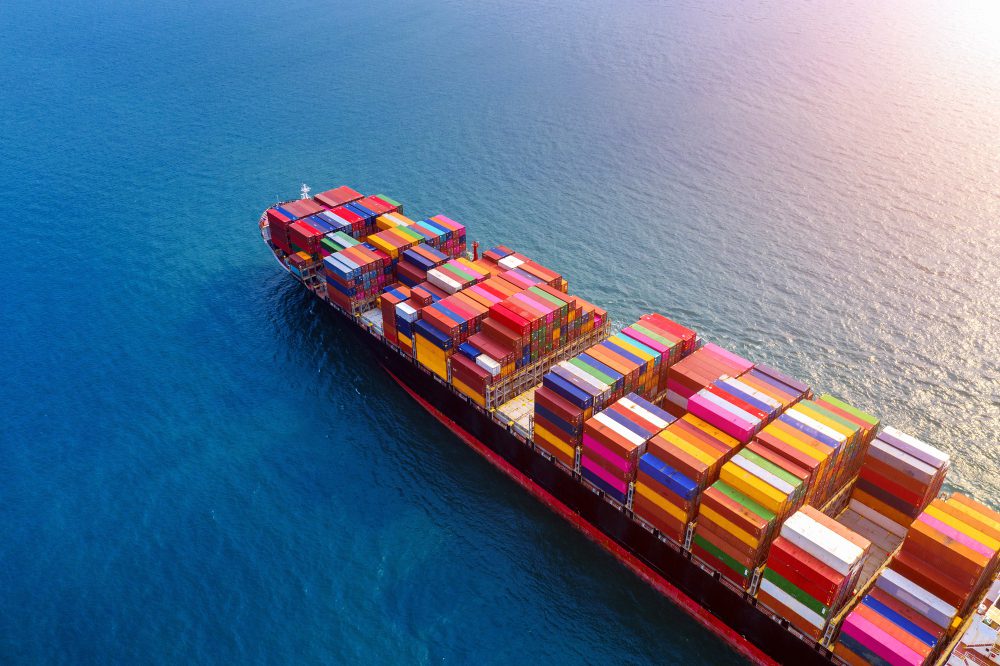
Shipping, of course, refers to the transporting of freight from one place to another. Most of the time it includes the selection of a carrier, the packaging of products, printing the shipment labels, and physically moving of the things utilizing trucks, ships, planes, or trains.
Shipping is usually regarded as the delivery execution part. It emphasizes primarily the transport of goods from a facility or supplier to its destination.
Shipping, for instance, when an online store ships an item out to the customer, the packaging, stamping, mailing, and delivery of the item is shipping to be done. This includes the work that involves operations like documenting, choosing the path and dealing with the transportation requirements.
Shipping is typically the last link in the supply chain and one piece of the entire puzzle that keeps the wheels spinning in terms of getting goods from point A to point B.
What Is Logistics?
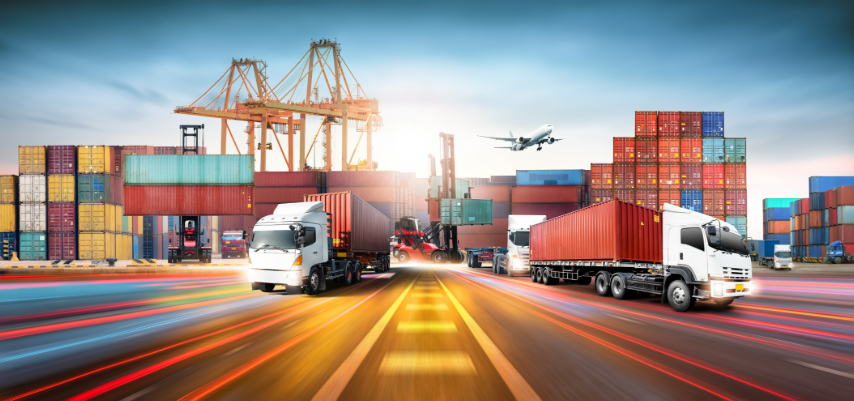
Logistics is broader than that. Involves the planning, coordination, and control of the physical flows of goods across the entire supply chain. These all cover transportation, inventory management, warehousing, packaging, and distribution.
On the contrary, shipping is about execution, whereas logistics is about abstract strategies. It decides how to procure, store and transport products in the best economic way possible.
Logistics practitioners determine where to strategically position warehouses; mode of transport; how to monitor stock; and the best route to deliver goods.
By its relevance in wider aspect, logistics incorporate all steps taken to enable smooth movement from manufacturers to end users.
How Do Shipping and Logistics Differ from Each Other
The main difference between all these types of processes is that while shipping and logistics work in conjunction with one another, they are also distinct in several ways.
Scope
While shipping specializes in the transport of goods, logistics encompasses the entirety of the supply chain journey, including planning, storage, and distribution.
Function
Shipping is operational and task oriented. Logistical aspects are strategic, encompassing decision-making and managerial coordination, tracing back to the International Organization for Standardization (ISO) definition.
Responsibilities
Shipping pertains to the handling of packaging, labeling, and transportation of goods. Logistics encompasses activities such as inventory control, warehouse management, transportation planning, and performance analysis.
Timeline
Shipping is in the last segment of product transportation, but logistics begin at the very first step of supply planning until product delivery is complete.
Working Together — The Relationship Between Shipping & Logistics
Shipping Logistics are not two different systems, they are two siblings which complement each other. Logistics provides the model and blueprint of how different operations are to be carried out smoothly from one point to another in the supply chain while shipping works on the execution of the delivery process.
Logistics, for example, is all about deciding where you should place your warehouse and which transportation routes you should use, while shipping ensure that everything is transported as needed. Shipping will not be coherent without logistics. Shipping is what gives logistics substance.
Together they create a complete system to provide goods to the customer quickly and reliably.
Reliable Shipping & Logistics Solutions with Kailash Shipping Services
If you are looking for dependable, efficient, and cost-effective shipping solutions, Kailash Shipping Services is your trusted logistics partner. With extensive industry experience and a strong global network, Kailash Shipping offers comprehensive services including freight forwarding, cargo handling, documentation support, and end-to-end logistics solutions tailored to your business needs.
Why Understanding the Difference Matters
For businesses looking to streamline their supply chain, it is important to understand the difference between shipping vs logistics.
Companies that separate shipping from logistics have a much clearer view on how to optimize their processes and increase efficiency. It allows organizations to identify not only where they stand, but what they need (a shipping carrier, a 3PL, etc.), making it easier to determine whether they need to partner with a specific carrier or a full-blown logistics provider.
Also, understanding these diversities enable companies to contain costs, improve delivery schedules, and better serve customers.
Conclusion
Logistics and shipping both fall under the umbrella of supply chain management, yet they don´t perform the same set of functions. Shipping refers to the physical transport of products, while logistics refers to the planning and management of the movement of goods from point A to point B.
With a better understanding of how the two functions interact, companies will be able to make operations more efficient, cut costs, and provide better customer experience. Today, having a good command of Shipping and Logistics is the key for a business to flourish in the fast-paced global marketplace.