
 Bhavik Khodiyar
  13 February, 2026
What Is Warehousing? Meaning, Types, Key Functions, and Advantages
In the current supply chain ecosystem, which moves rapidly, warehousing plays a much greater role than merely storing goods. It serves as the backbone of logistics operations that assist businesses in handling inventory, optimizing distribution, and delivering on the expectations of customers. It could be a local business or a multinational organisation, and one fact is that proper warehousing can directly affect cost management, delivery times, and the company’s overall performance.
What Is Warehousing?
Warehousing is a process through which goods are stocked in a special facility to be distributed to wholesalers, retailers, or end customers. It goes way beyond physical storage; it encompasses inventory management, physical handling, packing, processing orders, and dispatch.
A clean warehouse will mean that goods are secured, tracked properly, and can be easily retrieved when a need arises. Due to the increase in the complexity of supply chains and shorter customer delivery schedules, warehousing has become a strategic activity that helps the business scale and maintain a quality of service.
Types of Warehousing
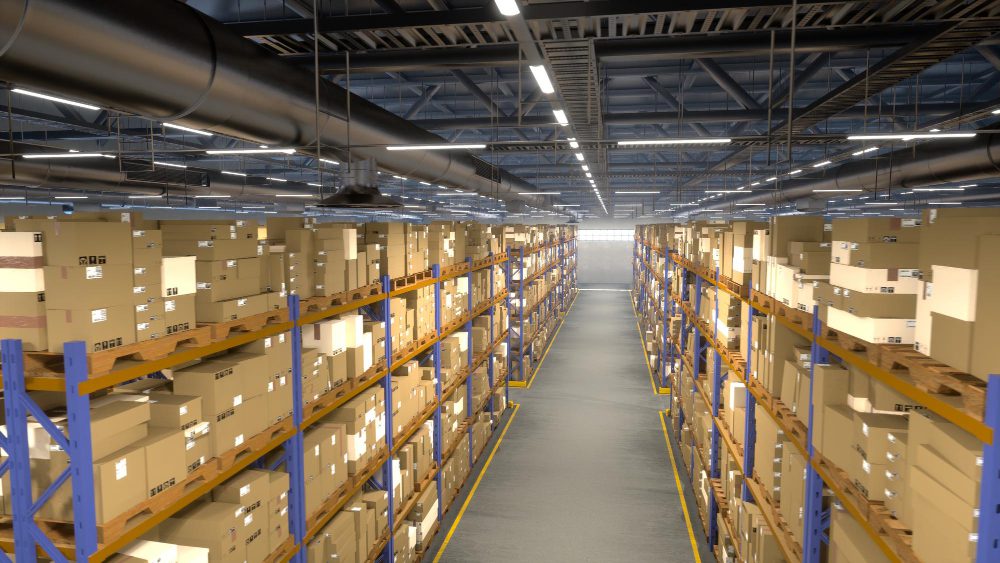
Various types of businesses have varying needs for warehousing depending on the industry, magnitude of inventory, and model of distribution.
Significant uses of warehousing available today are as follows:
1. Private Warehouses
Businesses operate and own their own privately managed warehouses. They provide perfect control of operations, arrangement, and protection. The cost of investment is relatively more expensive, but in the case of fixed and significant storage requirements, private warehousing is optimal for organisations.
2. Public Warehouses
Third-party operators manage public warehouses and rent them on short- and long-term bases. Such facilities are also appropriate for companies that need flexibility without spending much on infrastructure.
3. Distribution Centres
Distribution centres do not focus on long-term storage but on fast movement. In e-commerce, in retail, and supply chains of the FMCG, goods are received, sorted, and delivered in a short period of time.
4. Cold Storage Warehouses
Cold storage units are set up to process goods that are sensitive to temperature, such as food, drugs, and chemicals. Quality maintenance of products and shelf life is done through a managed environment.
5. Bonded Warehouses
Its goods are put in bonded warehouses where they remain until payment of customs charges. They allow the companies to pay taxes when goods are sold, as this gives them flexibility in international trade regarding finances.
Significant Warehousing Functions
Warehousing aids in supply chains in various operations. The most significant ones are:
1. Storage of Goods
Raw materials, semi-finished goods, and finished products are stored in a warehouse in a safe, organized manner. Storage systems are correctly provided and stored, making them readily available.
2. Inventory Management
Inventory control can ensure that a business does not run out of its stock or have excess stock. Digital tools are being used in contemporary warehouses to track the movement of stocks in real time and keep the correct records.
3. Packaging and Labelling
Warehouses also do final packaging and labeling to make the products ready to be transported. Adequate labelling enhances the recognition, management, and adherence to shipping rules.
4. Order Fulfilment and Dispatch.
Warehouses are crucial in creating the order in picking and packing to shipping so that the order can be met accurately and on time. Optimized processes help eliminate delays and enhance delivery reliability.
5. Value-Added Services
Several warehouses also provide other services, which include:
- Cross-docking enables goods to move faster.
- Kitting and assembly
- Reverse logistics and returns handling.
The business services allow firms to increase their efficiency without broadening their internal operations.
Advantages of Warehousing
Warehousing has several strategic advantages that translate to business development and the satisfaction of customers directly:
1. Better Inventory Control
Centralised storage would facilitate the accurate tracking of stocks, which would cut down on errors, wastage, and interference with operations.
2. Lower Transportation Costs
Warehouses are used as points of consolidation, minimizing the number of trips and transportation routes.
3. Faster Order
Processing, picking, packing, and shipping are improved with organised storage systems and automatic systems.
4. Improved Product
Security Warehouses have surveillance systems and environmental seals, which guard goods.
5. Business Scalability
Based on the seasonal performance, a growth in the market demand, or a variation in the inventory requirements, the warehousing solution can be scaled.
Factors to Consider When Choosing a Warehouse
Choosing the appropriate warehouse is essential for efficiency. The significant issues to consider are:
- Location: Areas accessible to markets and transport networks.
- Cost: Operation and handling costs, leasing costs.
- Technology: Automation and inventory management.
- Capacity: Current storage capacity and potential growth.
- Security: Climate-controlling and safety facilities.
Kailash Shipping Services: Professional Warehousing Solutions for Efficient and Scalable Logistics
The importance of the professional warehousing service can be very significant in facilitating businesses to have a well-organized logistics business. Kailash Shipping Services uses systematic warehousing to manage inventory, storage, and distribution. Their warehousing system incorporates both operational efficiency and scalable storage so that the companies that are interested in having a means to streamline their supply chains without losing track of the coastline and the completion dates of the delivery.
Final Verdict
Warehousing, as a strategic aspect of contemporary supply chain management, is no longer merely a storage activity. Businesses can enhance their efficiency, decrease expenses, and offer improved customer experiences by comprehending the meaning, types, essential functions of warehousing, and its benefits. An adequate warehousing approach is always an investment that can eventually determine business success in the long term by reinforcing business logistics.